PetIglu
A physical play installation teaching dogs and their owners to communicate, tested with real dogs in a Bogotá park.
- Role
- Design Student — Thesis Project
- Team
- Universidad de los Andes, Department of Design
- Timeline
- 2018
Humans and Dogs, Speaking Past Each Other
This thesis project started from a simple observation: most behavior problems between dogs and their owners come from a communication gap, not a bad dog — owners don't know how to read canine body language, and busy city life leaves little quality time to build that understanding.
Approach
The project studied canine intelligence research (Stanley Coren's nine-factor framework spanning memory, observation, adaptation, problem-solving, and language comprehension) and existing precedents — Cesar Millan's Dog Psychology Center, Nina Ottosson's interactive dog puzzles, Kenya Hara's Architecture for Dogs — before designing anything. Real owners were also asked what "quality time" with their dog actually meant to them, which surfaced a consistent theme: shared, mutually enjoyable activity, not just supervision.
What Was Built
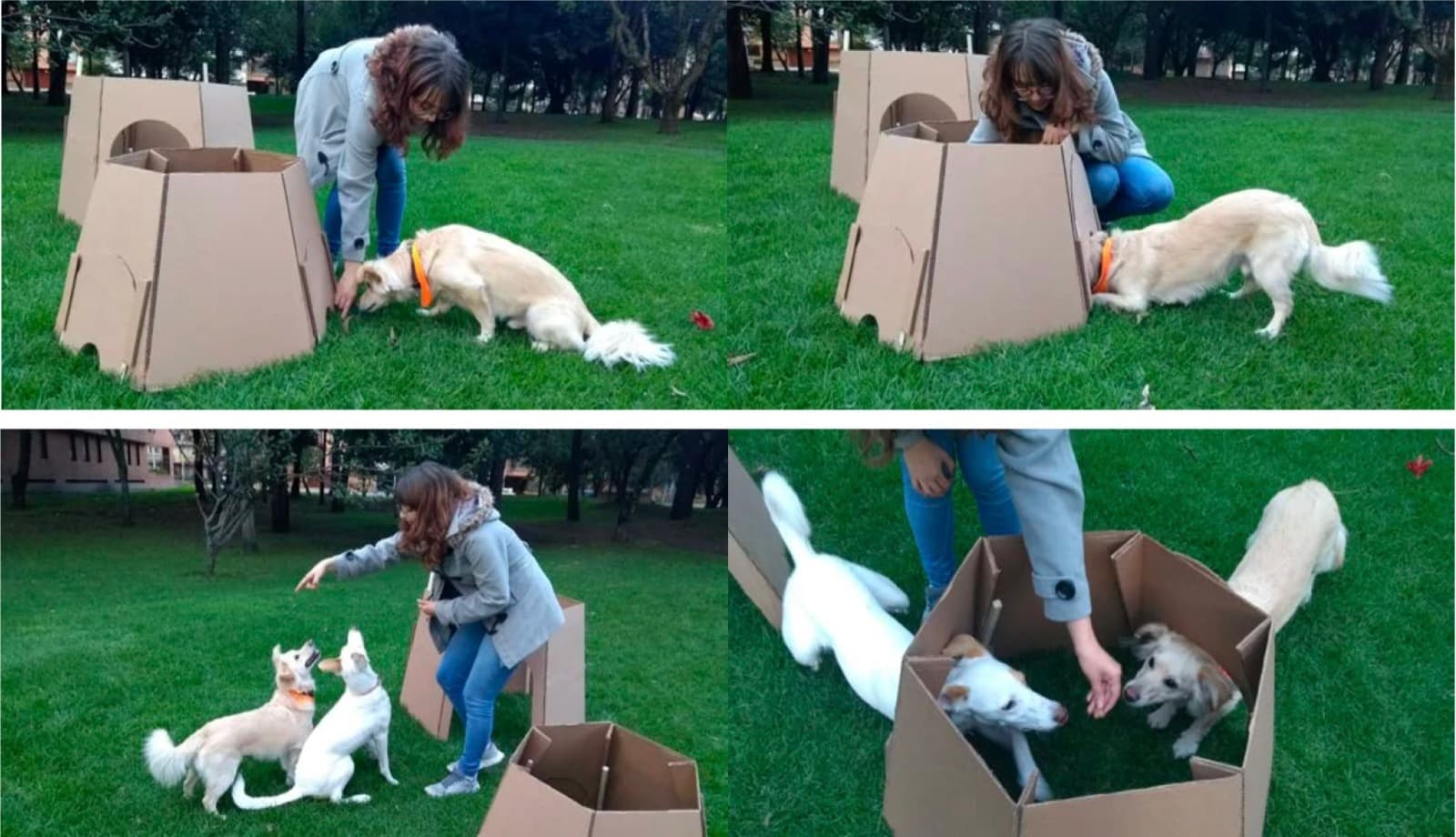
The result is a wooden play installation for public parks that gives a dog and its owner a shared physical challenge — actions like crossing, crawling, touching, and pushing, paired with objects like barriers, arches, doors, and levers, built around hiding a reward the dog has to work with its owner to find. Instructions and QR codes on the structure teach the owner what to do and why, turning the installation itself into the guide.
Interfaces
The installation
The wooden play structure being tested with real dogs and owners in a Bogotá park.
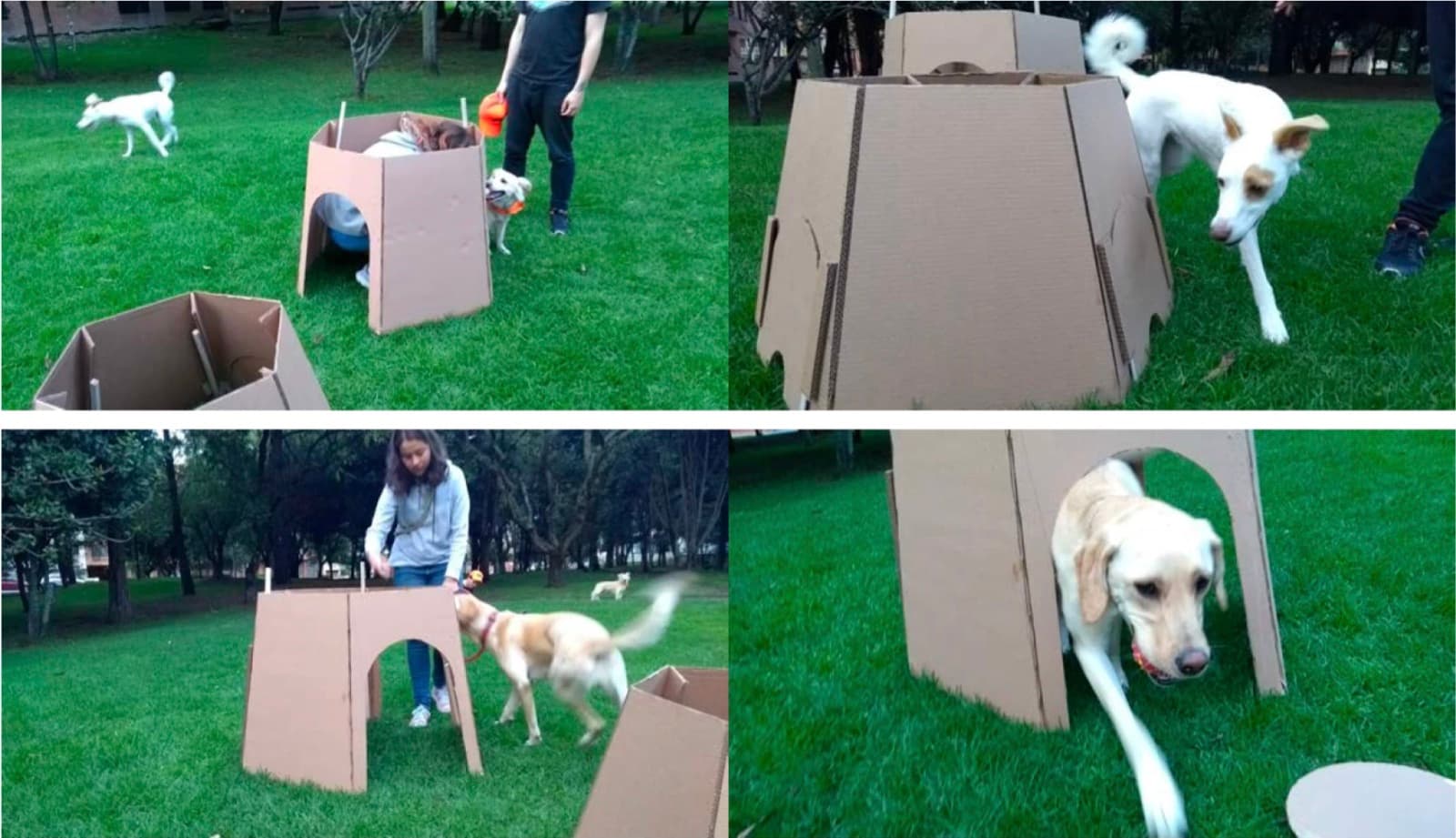
Field testing with real dogs
Multiple dogs and owners working through the installation's crawling and searching challenges.
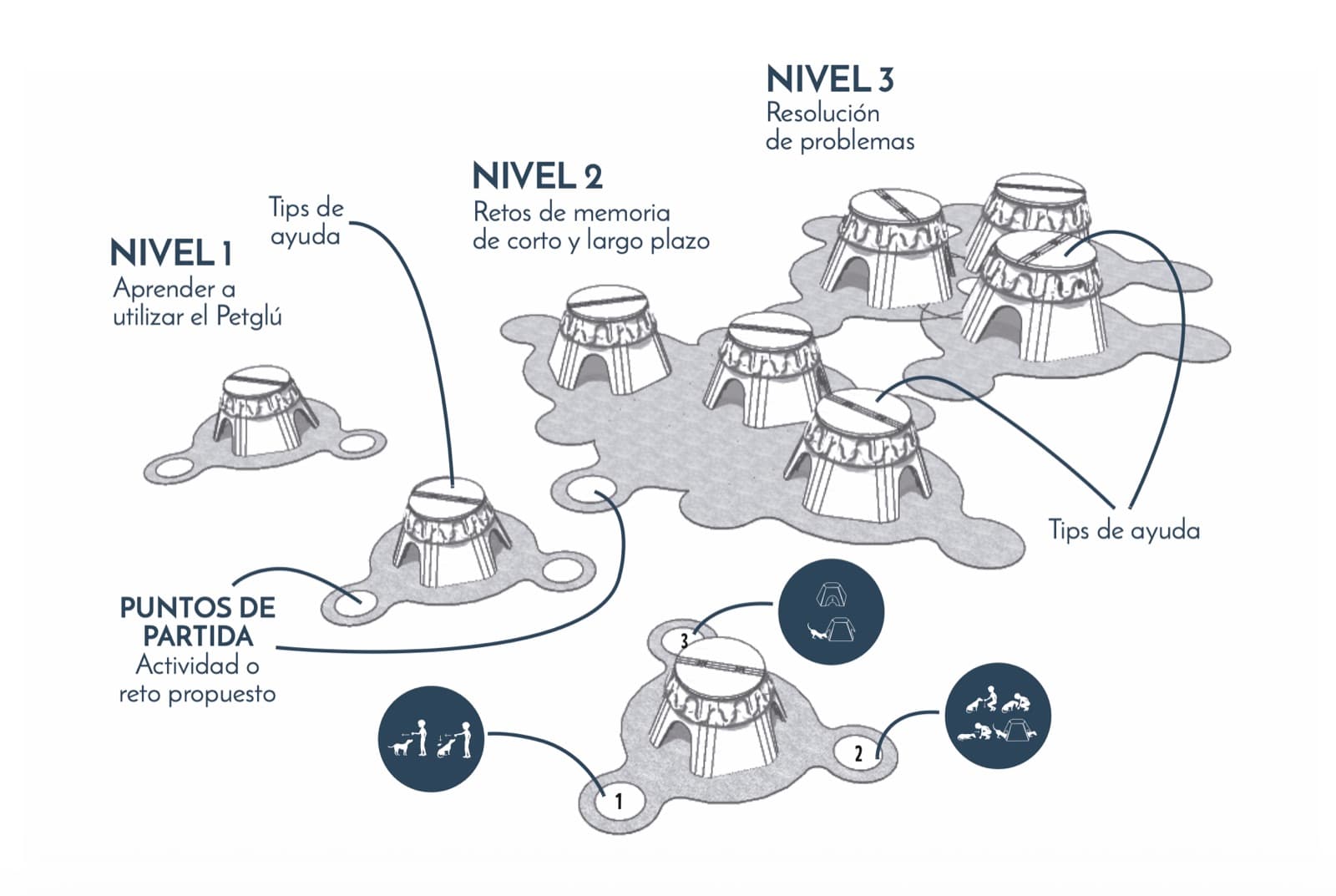
How the game works
The three-level structure — from learning to use the Petiglú, to memory challenges, to problem-solving.
Watch It In Action
PetIglu in the park
Impact
Reflection
The easiest version of this project would have been another dog toy. What made it a real thesis project was starting from the research question — why do dogs and owners misunderstand each other — and only then asking what object could actually address that, instead of the other way around.